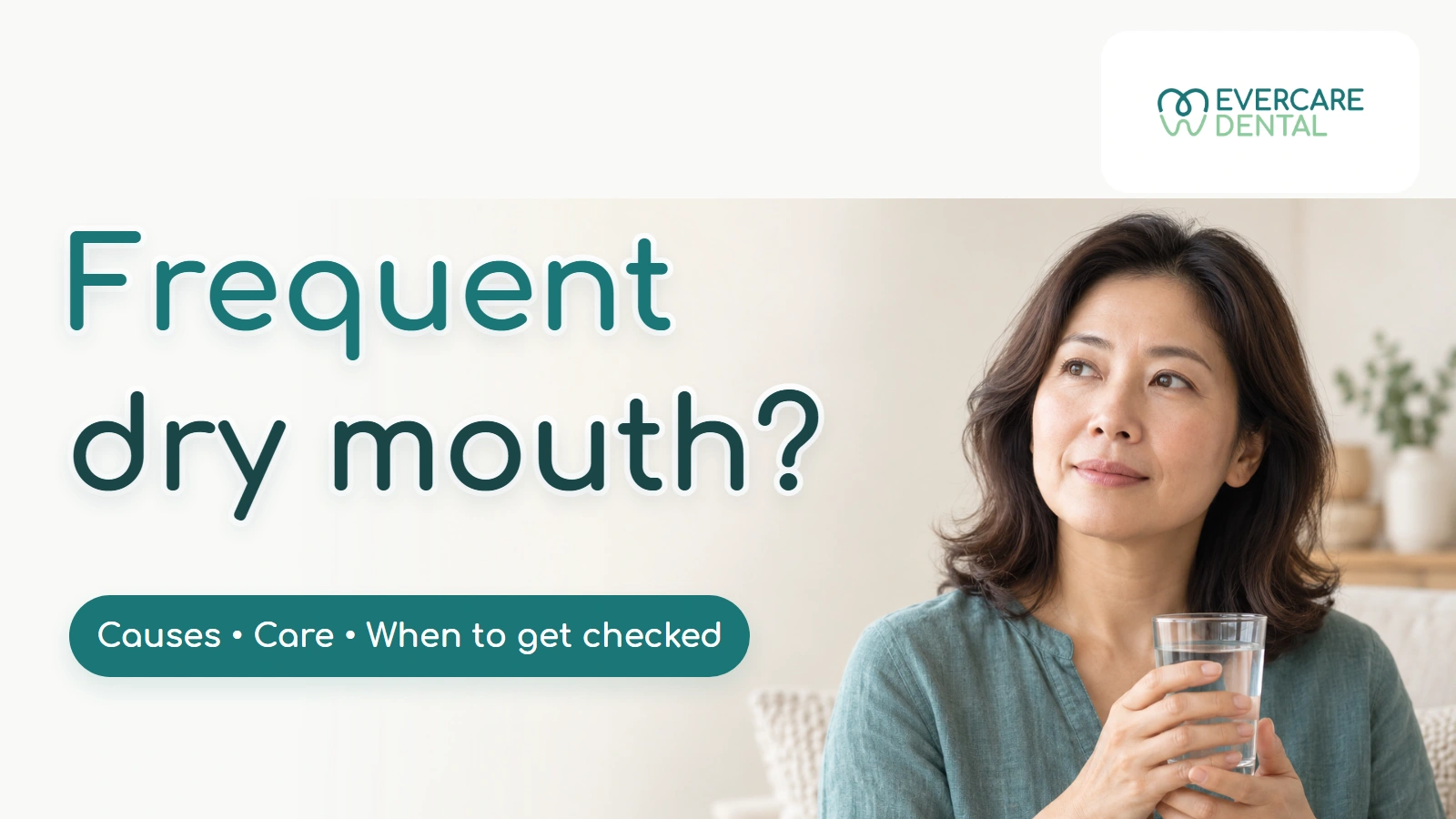
If your mouth feels sticky or dry much of the time, you probably notice it most while you are eating, talking, or getting through a long meeting without a glass of water. It is worth paying attention to, and we can help you look into what is behind it. Dryness that keeps coming back can get in the way of eating and speaking, and add to your risk of tooth decay — so this article covers what tends to cause it, what helps you feel more comfortable, how to protect your teeth in the meantime, and the signs that mean it is time to get checked.
Dry lips and a dry mouth are not the same thing
It helps to know whether the discomfort sits on the surface of your lips or inside your mouth, because the two are looked after differently and you can describe them more clearly at a visit.
| What you notice | What it can look like | What usually helps |
|---|---|---|
| Dry lips | Peeling, cracked or irritated skin on the lips | Weather, wind, sun and irritation can play a part. Use a lip balm, and do not lick or pick at peeling skin. |
| Dryness inside the mouth | A sticky feeling, a dry tongue, needing sips of water to eat or speak | Go through the medicines you take, note any other symptoms you have, and have your saliva looked at. |
| Both at once | Cracked lips together with dryness inside the mouth | They can happen together, so treat the lips and look into the inside dryness as well. Balm alone may not cover it. |
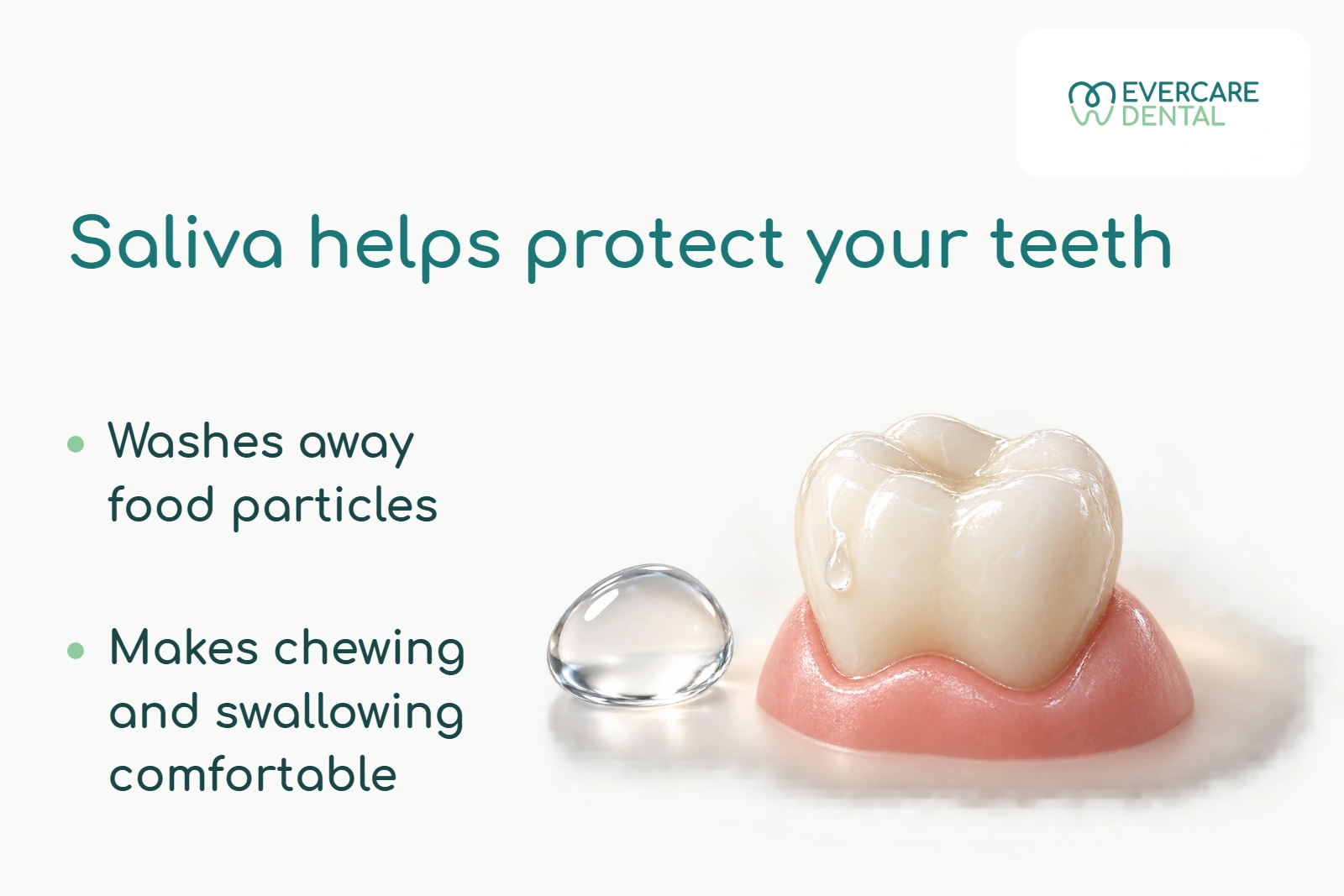
Saliva does a lot of quiet work: it makes chewing and swallowing comfortable, washes away food particles, and helps protect your teeth. When there is not enough of it, the risk of tooth decay and of oral thrush goes up. That said, a dry feeling on its own is not enough to confirm that your salivary glands are producing less — that takes an examination as well.
What makes your mouth dry so often
Everyday causes
The closest-to-home causes are not drinking enough, losing a lot of fluid through sweat, and breathing through your mouth while you sleep, especially when your nose is blocked. Anxiety can also leave your mouth feeling dry at certain moments. Keep a short note of whether it happens only when you wake up or all day long, so you have something real to go on rather than a conclusion drawn from one bad morning.
Medicines
Some medicines can reduce how much saliva you produce — among them medicines for high blood pressure, antidepressants, and medicines for bladder control. If the dryness started after you began a medicine or changed the dose, tell the person who prescribed it. Do not stop, reduce or switch a medicine on your own, because the benefit of the treatment and the side effect have to be weighed up together.
Health conditions and treatments
Dry mouth that carries on can be associated with diabetes, with Sjögren’s syndrome, or with cancer treatment such as radiotherapy to the head and neck. Sjögren’s syndrome may bring dry eyes with it. This does not mean that everyone with a dry mouth has one of these. Telling your doctor or dentist about your health history and any other symptoms gives them more to work with.
How to stay comfortable and protect your teeth
Keeping your mouth moist
Start with plain water, sipped through the day, instead of reaching for a sweet drink every time your mouth feels dry. If your doctor has set a limit on how much you drink, stick to the amount you have been given and talk it through with your treating team. Do not drink extra just because your mouth feels dry, and spread your sips across the total you have been allowed.
Sugar-free gum can help get saliva flowing, in cases where the glands still have some function left. If your mouth feels uncomfortable, ask a pharmacist or your dentist which moisturising gel or spray suits you. If you have natural teeth, avoid acidic saliva substitutes.
Protecting your teeth
Brush gently with fluoride toothpaste at least twice a day, and clean between your teeth every day. Your dentist may add extra fluoride depending on your decay risk. Mention the dryness at your dental check even when nothing hurts yet.
Easing off what makes it worse
Cut back on tea, coffee and alcohol if you drink a lot of them, and stop smoking. Steer clear of very sour, spicy or salty food that stings your mouth. If you use a mouthwash, choose one without alcohol. For lips that are dry as well, a lip balm adds moisture — and leave peeling skin alone rather than licking or picking at it.
When to see a dentist or a doctor
If you have tried the basics and the dryness carries on for several weeks, book a check so the cause can be looked into. But do not wait out those weeks if eating, speaking or swallowing starts to become difficult — or if you notice pain, redness, swelling, bleeding, or a sore white patch in your mouth. Get in touch with a doctor or your dentist for an examination.
At the visit we check your teeth and the lining of your mouth, and we look at the decay risk that comes with producing less saliva. If you also have dry eyes, are urinating often, or suspect a medicine is involved, see a doctor as well. Your history and a physical examination are what tell the person treating you whether a blood test or a measurement of your saliva would add anything, because what is needed differs from one person to the next.
What to have ready for your appointment
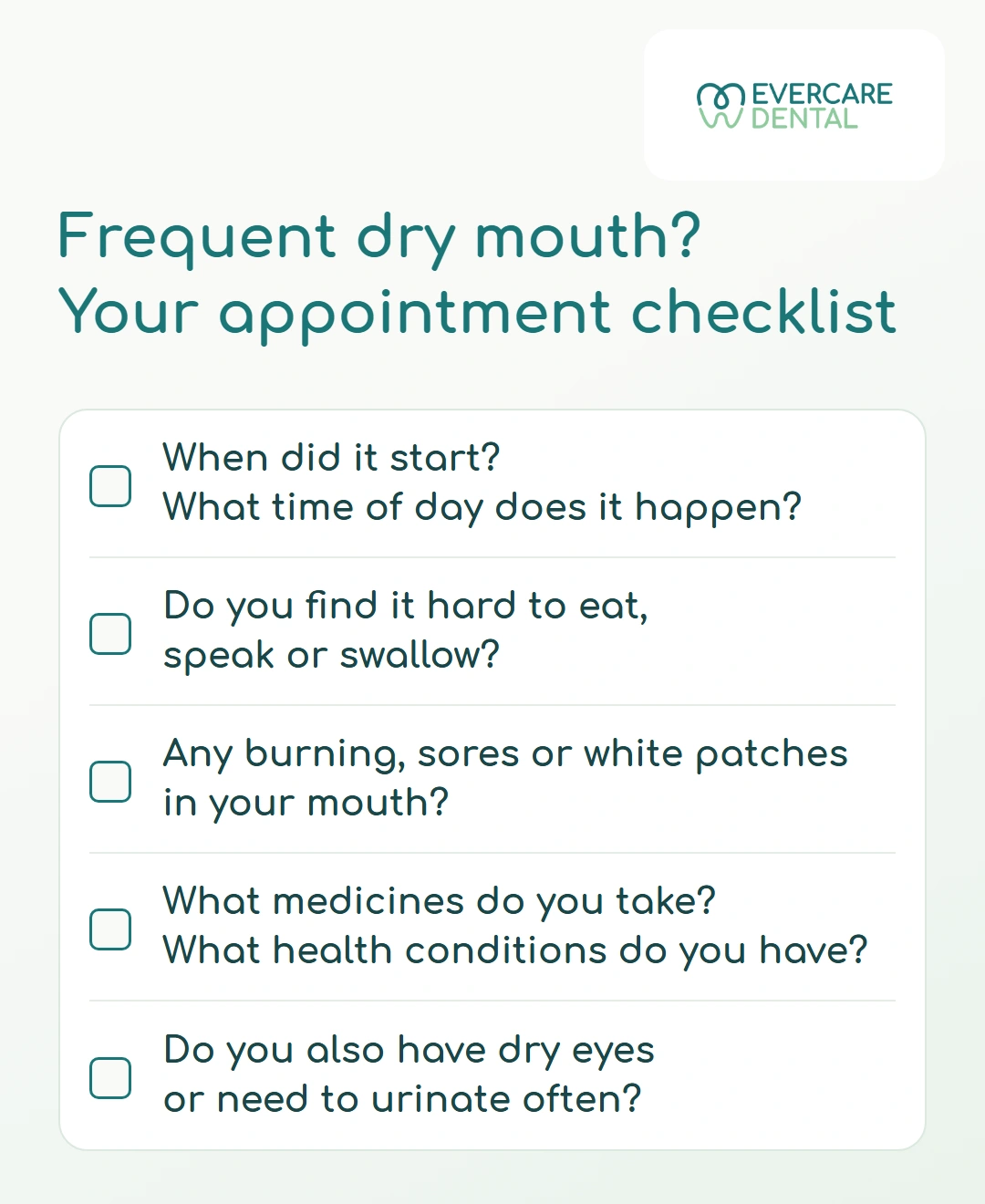
- When the dryness started, and what time of day it usually happens
- Whether eating, speaking or swallowing feels difficult
- Any burning, sores or white patches in your mouth
- The medicines you take now, and any health conditions you have
- Whether you also have dry eyes or urinate often
Bring the list of medicines and supplements you are taking, and say what you have already tried and what you noticed. It helps the person seeing you understand your symptoms and give advice that fits you.
Common questions about dry mouth
| Question | Answer |
|---|---|
| Do I need to take extra vitamins for a dry mouth? | Not something you can decide from the symptom alone. Dry lips can come from the weather, from irritation, or sometimes from a lack of certain nutrients. Dryness inside the mouth brings in medicine and saliva factors that need looking at too. Find the cause first, then decide about supplements. |
| Will artificial saliva clear it up for good? | No — it relieves the dryness for a while. It does not restore how your salivary glands work, and it does not deal with every cause. If it helps but the dryness keeps coming back, get it checked and keep up decay prevention alongside it. |
Book an oral health check with us
If your mouth is dry often and you would like it looked at, book an oral health check: we go through your symptoms and the medicines you take, check your teeth and the lining of your mouth, and look at your decay risk. We are at Sindhorn Building, G floor, on Wireless Road. Message us on LINE @evercaredental to book.
References
- NIDCR — Dry Mouth
- NHS — Dry mouth
- American Dental Association — Xerostomia (Dry Mouth)
- NHS — Sore or dry lips
- Cambridge University Hospitals — Restricting your fluid intake
- NHS Specialist Pharmacy Service — Considerations for artificial saliva products in dentistry

- Master of Science in Prosthodontics, Chulalongkorn University
- Doctor of Dental Surgery (Second-Class Honours), Chulalongkorn University
(This article is general information. It is not a substitute for an examination or for advice given to you personally.)